
Thursday, September 20, 2012
Waterfall Hunting
 Written by
Chad


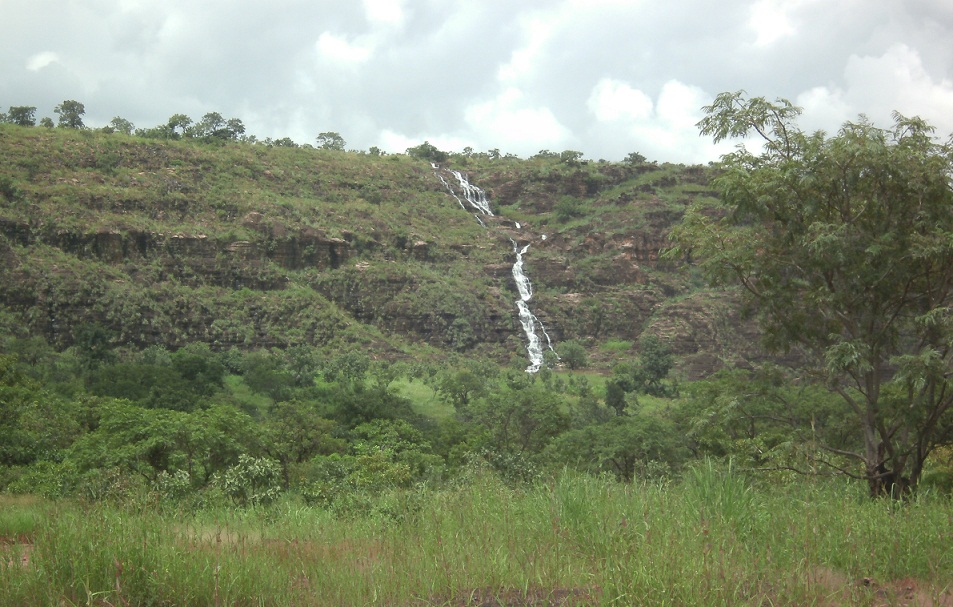
But come late August and the last hurrah of rainy season, the deluge starts coursing off the cliffs. Overnight, waterfalls start popping up every which where. As my volunteer work winds down, I've been increasingly putting on my Indiana Jones hat and pioneering solo and team expeditions to take photos. To bring you these photos, I've risked life and limb trudging through marshlands and dodging booby traps, such as low tree limbs, and ferocious beasts, such as squirrels.

 Waterfall number one, pictured on the right, is really far away and I would have had to machete my way through a few football fields of overgrown underbrush to reach it. It's barely visible in this low-quality picture, but to me it resembles the waterfall from Pixar's "Up." If there were any houses here flying on helium balloons, I didn't notice them. Below this paragraph are three pictures of waterfall number two.


Waterfall number three, tucked away in the crevasse, required that I in my gym shorts and camera trudge through a family's field while they were working. They were fairly forgiving, playing it off like it's something that happens every day out in the wilderness.

The last waterfall has special significance for the village. Every year in mid-August they have an all-day culture party atop it. People drive in from all across the country to drink, dance, and watch performances atop the raging rapids. Tana and I first visited the infamous Cascades of Takalédougou back in dry season in early 2011. To get there, you must scale one of the many irrigation pipelines that the sugar corporation SOSUCO uses. Our courtyard family members, Fatouma, Mogomake, and little Natagoma, accompanied us one foggy day to the summit where there was barely a trickle of a waterfall.


Under stormy skies, we came again recently when the scenery is much more lush. You can see the highway and then sugarcane fields in the distance.


This time when we came, we brought some friends: volunteer Barry, Fernando (a Portuguese organic farming researcher), Daouda (Fernando's friend), and volunteer Anne. Barry set his camera in a tree on a timer, then barely made it into the picture.


After waterfall hunting, we all made some fajitas, traded movies, and then went to see a talent competition at the local bar.


Thursday, August 09, 2012
Two Years in Headlines
Written by
Chad
We've been amidst some politically weighty world news during our time here. Here's a running list from whatever random news sources I could scrounge up that represent some of the big events that have affected our lives and work:
 Nov 26, 2010 - Blaise Compaore re-elected in Burkina Faso landslide - He has been the president since the eighties.
1 January 2011 Burkina Faso Ranks 176 out of 178 on UN Economic Human Development Index
10 January 2011 - Al Qaida 'behind Niger kidnapping' - This led to Peace Corps Niger closing.
Tunisia
14 January 2011 - Tunisia: President Zine al-Abidine Ben Ali forced out
 14 January 2011 - Tweeting Tyrants Out of Tunisia Only a three countries north of us, Tunisia's government was overthrown and the revolution set off a chain reaction for the Arab Spring.
Egypt
25 January 2011 - Anti-Government Protests Continue in Egypt
28 January 2011 - Egypt's president imposes nationwide night curfew
5 February 2011 - Egypt ruling party leaders resign but regime holds -The revolution in Cairo that led to Mubarak's fall. We listened live on BBC World Service with our shortwave.
Cote d'Ivoire
6 April 2011 - Gbagbo negotiating exit from Ivory Coast
7 May 2011 - Ouattara takes oath months after Ivory Coast vote
Burkina Faso
18 April 2011 - Students Burn Buildings in Burkina Faso Protests
15 April 2011 - After Protests, Burkina Faso’s President Dissolves Government
18 April 2011 - In Burkina Faso, military mutiny spreads
19 April 2011 - Burkina Faso gets new PM as mutiny spreads
22 April 2011 - Burkina Faso pres. names himself defense minister
27 April 2011 - Merchants torch buildings in Burkina Faso
28 April 2011 - Police in new mutiny in Burkina Faso
23 May 2011 - Protesting students ransack Burkina ministry building
25 May 2011 - Burkina Faso averts crisis - We also wrote about being stuck inside our transit house in the city during all the April protests. During the heat of the unrest, we were put up in a nice hotel far from the protests where we played kickball and ultimate frisbee and had a delicious Easter dinner.
2 May 2011 - U.S. kills Osama bin Laden decade after 9/11 attacks
10 May 2011 - Peace Corps Volunteers Speak Out on Rape
 21 November 2011 - Obama Signs Kate Puzey Peace Corps Volunteer Protection Act
20 August 2011 - Nigeria leader, UN vow to work on after HQ bombing
6 September 2011 - Libya convoy enters Niger, Gaddafi not aboard
3 October 2011 - Residents flee Gaddafi hometown
21 October 2011 - Gaddafi dead
18 November 2011 - Benin: Pope Heads to Voodoo Heartland On Africa Visit
15 December 2011 - Victoria’s Secret Revealed In Child Picking Burkina Faso Cotton
13 January 2012 - Child Labor For Victoria’s Secret Cotton Examined By U.S.
16 April 2012 - Charles Taylor convicted of war crimes in Sierra Leone
Mali
3 April 2012 - 200 000 flee fighting in Mali - By September 18, 2012 there are still 108,000 Malian refugees in Burkina Faso
6 April 2012 - Mali coup: al-Qaeda linked rebels declare independence
12 July 2012 - White House offers $10 million for Mali refugee aid
29 July 2012 - Mali's Interim President Outlines Political Transition - Peace Corps Mali was suspended and we began to see more ex-pat development workers and missionaries around Banfora and Bobo staying at hotels.
16 July 2012 - U.S. Peace Corps volunteers questioned in Ghana over death
25 July 2012 - Ghana VP sworn in hours after President John Atta Mill's death
6 September 2012 - Burkina Faso's Paralympic team overcomes bureaucratic/logistical obstacles to compete
14 September 2012 - Widespread protests against U.S. over anti-Muslim film - Due to a slanderous film targeting Mohammed produced by an American ex-convict, there is outrage in the Arab Spring: enraged extremists react violently in Libya, Egypt, Tunisia, Afghanistan, Yemen, and Lebanon.
16 September 2012 - Burkina Faso: President deplores Muslim violence
18 September 2012 - Burkina Faso ambassador to France resigns after being accused of embezzling $518,000
Commercial-Free Marathon of Technicolor Entertainment
Written by
Chad
Coming to your living room from our sunny studios in safariland is a brand new variety show like no other. Gather your children around your family computing machine, turn the dial three clicks, and get ready to be astounded...
Wednesday, August 08, 2012
The King of Cassava
Written by
Chad

 Behold Siaka reigning supreme over his kingdom of cassava plants. All through late July while his neighbors were harvesting their yields, Siaka lay in wait, counting down the moments until his master plan could be hatched. You see, he and his wives are locally known for their business of manufacturing and distributing attiéké, a delicious starchy dish, like rice or couscous. Siaka is a beloved community luminary, one of the few non-city-dwellers I've met here proficient in English. He's also our village's own farmer version of Warren Buffett, dedicating countless hours to writing out business plans and plotting out how to get some sort of foothold on his future.
Today Siaka took the first step in his ascent to becoming the business tycoon he's destined to be. He took a microloan through an online microcredit institution called Zidisha. And it's all thanks to his own persistence as well as the awesome legwork and string-pulling of friends (previous volunteer Amanda and her family, former assistant PC director Dan Rooney, and James and Julie alongside their entrepreneur friend also named Siaka).
On the Zidisha website, Siaka made a profile and within a few days, generous donors from all over the world chipped in. Before he knew it, the money was wired to the Banfora Ecobank: a thousand bucks for a gas-powered cassava grinder and some sifters. On a first-come, first-donate basis, a group of philanthropists (most of whom had never met Siaka before) pitched in their pennies, which he'll pay back each month as he builds his empire. Today, Siaka has the honor of being the second Zidisha loan in the country and has further invested in solar panels so that his village women employees can work into the night. Here's a look at the online system that made his loan possible:


Microcredit has been around since the seventies but has only recently caught on in the US thanks to the internet. If you've ever watched Hulu as I have, you've probably also ignored ads for Kiva, one of the most popular of these microloan sites. These are connected times we live in, and I wholeheartedly believe that microloans are one of the best ways for us middle-class Americans to lessen the poverty of people in the developing world. It's a system with built-in accountability that is statistically more often than not a win-win. It motivates success-oriented people to think critically and work hard, patterns of success that cascade to others around them. Yada yada, world peace, yada yada... Anyway, I'll see myself down from this soapbox, but take a look first at these photos and film of the glorious arrival of Siaka's new cassava grinder. Watch him in his silly hat unload it from the bush taxi, haul it over, cut the ribbon, and grind some inaugural cassava.


Wednesday, May 30, 2012
A Couple Colloquialisms in Jula
Written by
Chad

Hey, let it be known that we are still alive and still doing the same stuff we usually do, whatever that is. One of those things we're supposed to do is share local language with people outside of Africa. In the spirit of this, here are some phrases in the Jula (Dioulla) language that I've picked up recently.
Tubabuce, i nun kala kadjan
Hey, white man, you have a big nose
Tubabuce, i ka don ke cogo majni
Hey, white man, you dance weird
Tubabuce, i ka sabi bo
Hey, white man, your smell is coming out
Tubabuce, i ye nambara mogo lo ye
Hey, white man, you're not a good person
Tubabuce, i kera kumi a sigeni lo
Hey, white man, you look exhausted
Tubabuce, mun kera i bi kuma i yera ma?
Hey, white man, why are you talking to yourself?
*Note: Nobody ever actually says any of this... in this sense these aren't all that colloquial. But from the look on people's faces sometimes, I could swear they're thinking some of these things.

Tana teaches some kidlets how to look both ways before crossing the street
Sunday, April 15, 2012
Hiking for Honeywine, My Career as a Runway Model, & More
Written by
Chad


 First Anecdote: Our buddy San dragged us on a day trip up to the quaint community of Koro, the picturesque birthplace of his girlfriend Sya. Only a few hours away from our own stomping grounds, we couldn’t help but notice striking differences in local tradition, way of life, and industry. For instance, while residents of our site specialize in sugar production, Koro residents quarry stone to pave the entire country’s highway system.
It's no casual hike to get up there, since it's couched atop an especially bouldery mountain chain. After our twenty-minute trek through the silent wilderness, we reached the summit and were suddenly face to face with the bustling clamor of children running around, fathers getting drunk in the shade, and mothers preparing lunch. There’s a continual conga line of women climbing up and down the mountain to fetch water in their headbowls from the one water pump at the base of the cliffs. This strenuous labor has always been necessary, and their entire population hinges on that one faucet.


At an auntie’s house with a valley viewshed, we kicked up our boots and paid for the house special—honeywine, also called mead. This is a rarity I hadn’t yet encountered anywhere else on this continent, and it tastes like it could be a soda product. We chatted about the ceremonial masque festival (where dancers dress in monster costumes and wreak havoc) that would start in mere hours. We also chatted about the corrupt police who would probably ask a bribe to re-enter the city later.
 After two goblets of honeywine, we worked our way down to a hangar with a green tarp that serves as the village commons. It was evidently naptime, so we were spared from the otherwise invariable stares of these rural dwellers who hardly ever see a foreigner. When we left Koro late afternoon, we were stopped by the police at the checkpoint (see the picture below). Instead of the six-dollar bribe we had anticipated, our driver was only forced to dish out 2 dollars.

__________________________________________________________
Second Anecdote: Yesterday, Anne's association of tailor apprentices called ATTA hosted a carnival for the graduation of its students. So that means that Tana, Lindsy, Evan, Anne, and I got to be runway models for their chic stylish formal wear. I figured it was only a matter of time before I was "discovered" by some fashion talent scout, but thanks to Anne I've skipped that step and somehow achieved my life's dream anyway. I believe that Scott snapped some high-quality pictures that he'll give me at some point, but for the meantime, here's some pictures from my phone:

 It was magic. The cameras loved us. The paparazzi ate it up. I made three ladies faint. Evan and I were met with cheers from the crowds when strutted out and struck our dashing poses. We upstaged a local girl in a full wedding dress, or at least that's what I tell myself. My newfound fame went straight to my head, and I shouted at a seven-year-old to bring me coffee, then promptly fired him for not understanding English. Numerous magazines have contacted me to be a cover model, but I'm holding out for Time (person of the year issue).
I mean, just look at how beautiful we are. Good thing we weren't in Paris, or our beauty would have melted all the paint off the walls at the Louvre.

__________________________________________________________
Third Anecdote: My neighbor found a baby monkey out in the bush and brought it home. She's accepting suggestions for names.

__________________________________________________________
Fourth Anecdote: Here's a plug for Scott's blog. He did some dazzling photography recently at the national masque festival in Dedougou with all its wacky costumes. Some of them look like what Dr. Seuss might regurgitate. Some of them look like Sesame Street on an acid trip. But even those most nightmarish ones are captivating. The masques are truly one of the most fascinating aspects of Burkina culture.

__________________________________________________________
 Fifth Anecdote: Thank you so much to everyone who has donated and helped raise awareness for the amphitheater campaign. You have helped raise 75 % of the goal! We're very excited that it's coming together so quickly, and there have been so many anonymous donations. Thank you, anonymous. We've been busy preparing promotional materials, such as the official logo, which we'll post as soon as possible. Oumar has had multiple meetings with the local land chiefs and as soon as the total is reached, we're going to hit the ground running with organizing the transport of construction materials. The only factor that may delay construction is rainy season (June-August), but everything is otherwise lining up perfectly.
We're going to set the date soon for a "grand opening" promotional event at which Oumar can present the plans and the funds to local stakeholders (hotel owners, financiers, government bigwigs, and tourism entrepreneurs). This event will also help excite the community to buy into the benefits of its new educational space. We'll keep you updated on this blog and on the facebook page all the news and photos generated by this event.
Thanks again for helping us with the final push! We appreciate you referring your friends and family to the donation page:
Wednesday, March 14, 2012
What Am I Doing Here?
Written by
Tana
I've been wanting to write for some time about my actual work here as a volunteer. It's just hard to put into words the complex combination of progress, setbacks, pride, humility, frustration, and awe that inevitably result from Peace Corps work. On the one hand, I don't want to sound like I'm bragging, but on the other, I don't want to downplay something that is actually meaningful or impactful. I also hesitate to say when things aren't going well, because I don't want to discourage anyone who reads this.
Some of the moments here are incredible, like the (upcoming!) story about my health club students. But sometimes little successes can bring on the warm fuzzies in full force. Hearing someone say, "Wow, you can really speak Jula now!" Seeing a friend become extremely animated and inspired while we debate a social issue together. Finding out that my mentor, Oumar, feels like he learns something new from me whenever we're together.
Other times can feel downright useless. Since I'm being honest here, I'll admit that there are some days I shut my door and pretend I'm not here because I'm tired, sick, or just don't feel like speaking in another tongue. There are times when I really give myself a hard time for not doing enough, or talking to enough people, or going to the clinic enough. But nobody said the Peace Corps would be easy. They just said it would be worth it. There have been times when I've doubted even that.
But more recently, I'm seeing my service as one long project rather than 800something days added up. I've taken stock, and I feel good about what I've accomplished even if I have had to spend some time on the bench from allergies, amoebas, and mild anemia. I've been here almost a year and a half, and I'm not exactly sure when it happened, but I've become an actual part of the community. Of course I still stick out, but less like a sore thumb and more like the quirky nerd I've always been.
I've often been asked what a typical day is like in my life as a PCV. Like I mentioned, you could pick two of my days at random and one would make me look like a saint, the other a sloth. So here is my best shot at a fair and honest depiction of a typical week walking in my dirty, Nike memory foam flip flops:
Sunday. Get up at 8 to wash the clothes. Have instant coffee and a snack. Wash all morning. Stop to eat lunch once hands start hurting. Rinse whatever's still soapy and leave the rest for next time. Spend the rest of the day recovering from the exhaustion. Play scrabble by lantern light with Chad after dinner.
 Monday. Be woken up by a neighbor knocking who wants to borrow my bike. Give her the bike, go back to sleep. Get up for real when she gets back from the market. Spend the next hour talking on the porch about her marriage prospects. Weave in discussion of family planning options and how to discuss it with her partner. Eat brunch. Call another volunteer about girls' camp preparations. Hang out at home until sunset, then go to a friend's house and drink cashew apple juice as we discuss the future of her business. Then head home for dinner and catching up on my favorite shows on the computer.
Tuesday. Have tea and pancakes. Bike 1km to the health clinic for a meeting with the new health staff. Explain what Peace Corps is and discuss plans for upcoming training activities. Stop by the school briefly during lunch time to ask the director a question about spring break. End up talking with a teacher for two hours about literacy rates, student motivation, and behavior change theory. Go home very hungry. Make plain noodles with parmesan (thanks, family) and then help my surrogate grandma sweep up the leaves in the courtyard. Try to learn some new guitar chords.
Wednesday. Wake up feeling motivated. Start cleaning the house. Get overwhelmed and give up. Start watching a movie instead. Get interrupted by a friend I haven't seen in a while. Sit on the porch together and discuss a possible budget for building a new pigpen for her family farm. Grab lunch once she leaves and fall asleep, overheated. Wake up confused, drink lots of water and talk for an hour with Chad about my new ideas. Eat dinner together and finally at least get all the dishes done. Well most.
Thursday. Grab coffee and a granola bar then head to a nearby town for a family reunion. Greet all of the important family members, including the eldest women who are in the ceremonial hut, complete with four disembodied bull heads. Proceed to being forced to eat oily rice with beef after insisting that we already ate, thank you. Smile to hide some mild gagging. Hand over the remaining beef chunk to Chad (the benefit of serving as a married couple). Drink copious amounts of water. Leave after a polite amount of time. Lend a friend our camera to record the rest of the event. Grab a semi-cold Coke and go home to finally finish that movie.
Friday. Eat. Bike to the school to remind the kids of the upcoming health club meeting. Stop by two houses where individuals do composting. Discuss an upcoming training opportunity in broken Jula then take their pictures for use in the composting publicity. Realize too late that I forgot to put on sunscreen. Go home. Eat. Go to bed early.
Saturday. Wake up in the middle of the night from mouse noises. Think of a great project idea and write it down. Have a bottle of water and go back to bed. Get up for real later and make sure everything is ready for health club. Have breakfast. Invite a friend to come help teach the kids. Bike to the school after lunch. Teach the basics of nutrition and play a sorting game based on favorite foods and a matching game with food and food groups. Discuss upcoming spring break activity plans. Then hand over the soccer ball and watch to make sure they don't hurt each other. Grab a Coke, almost cold this time, on the way home, and spend the evening drawing and maybe playing guitar and singing.

Note: This is just an example to create a picture of what my personal experience is often like. Peace Corps service is very diverse, between volunteers, across sectors, and around the world. Some volunteers work 9 to 5 schedules. Some take every meal with their neighbors. Some fill clear job positions, and some, like me, create their jobs as they go along. There is not just one right way to be a volunteer. The key is that we try to live by consistent principles of development and respond to the real needs of our communities. Feel free to post any unanswered questions you may have as a family member, blog enthusiast, or future volunteer. I will be glad to post a FAQs entry some time soon.
Some of the moments here are incredible, like the (upcoming!) story about my health club students. But sometimes little successes can bring on the warm fuzzies in full force. Hearing someone say, "Wow, you can really speak Jula now!" Seeing a friend become extremely animated and inspired while we debate a social issue together. Finding out that my mentor, Oumar, feels like he learns something new from me whenever we're together.
Other times can feel downright useless. Since I'm being honest here, I'll admit that there are some days I shut my door and pretend I'm not here because I'm tired, sick, or just don't feel like speaking in another tongue. There are times when I really give myself a hard time for not doing enough, or talking to enough people, or going to the clinic enough. But nobody said the Peace Corps would be easy. They just said it would be worth it. There have been times when I've doubted even that.
But more recently, I'm seeing my service as one long project rather than 800something days added up. I've taken stock, and I feel good about what I've accomplished even if I have had to spend some time on the bench from allergies, amoebas, and mild anemia. I've been here almost a year and a half, and I'm not exactly sure when it happened, but I've become an actual part of the community. Of course I still stick out, but less like a sore thumb and more like the quirky nerd I've always been.
I've often been asked what a typical day is like in my life as a PCV. Like I mentioned, you could pick two of my days at random and one would make me look like a saint, the other a sloth. So here is my best shot at a fair and honest depiction of a typical week walking in my dirty, Nike memory foam flip flops:
Sunday. Get up at 8 to wash the clothes. Have instant coffee and a snack. Wash all morning. Stop to eat lunch once hands start hurting. Rinse whatever's still soapy and leave the rest for next time. Spend the rest of the day recovering from the exhaustion. Play scrabble by lantern light with Chad after dinner.
 Monday. Be woken up by a neighbor knocking who wants to borrow my bike. Give her the bike, go back to sleep. Get up for real when she gets back from the market. Spend the next hour talking on the porch about her marriage prospects. Weave in discussion of family planning options and how to discuss it with her partner. Eat brunch. Call another volunteer about girls' camp preparations. Hang out at home until sunset, then go to a friend's house and drink cashew apple juice as we discuss the future of her business. Then head home for dinner and catching up on my favorite shows on the computer.
Tuesday. Have tea and pancakes. Bike 1km to the health clinic for a meeting with the new health staff. Explain what Peace Corps is and discuss plans for upcoming training activities. Stop by the school briefly during lunch time to ask the director a question about spring break. End up talking with a teacher for two hours about literacy rates, student motivation, and behavior change theory. Go home very hungry. Make plain noodles with parmesan (thanks, family) and then help my surrogate grandma sweep up the leaves in the courtyard. Try to learn some new guitar chords.
Wednesday. Wake up feeling motivated. Start cleaning the house. Get overwhelmed and give up. Start watching a movie instead. Get interrupted by a friend I haven't seen in a while. Sit on the porch together and discuss a possible budget for building a new pigpen for her family farm. Grab lunch once she leaves and fall asleep, overheated. Wake up confused, drink lots of water and talk for an hour with Chad about my new ideas. Eat dinner together and finally at least get all the dishes done. Well most.
Thursday. Grab coffee and a granola bar then head to a nearby town for a family reunion. Greet all of the important family members, including the eldest women who are in the ceremonial hut, complete with four disembodied bull heads. Proceed to being forced to eat oily rice with beef after insisting that we already ate, thank you. Smile to hide some mild gagging. Hand over the remaining beef chunk to Chad (the benefit of serving as a married couple). Drink copious amounts of water. Leave after a polite amount of time. Lend a friend our camera to record the rest of the event. Grab a semi-cold Coke and go home to finally finish that movie.
Friday. Eat. Bike to the school to remind the kids of the upcoming health club meeting. Stop by two houses where individuals do composting. Discuss an upcoming training opportunity in broken Jula then take their pictures for use in the composting publicity. Realize too late that I forgot to put on sunscreen. Go home. Eat. Go to bed early.
Saturday. Wake up in the middle of the night from mouse noises. Think of a great project idea and write it down. Have a bottle of water and go back to bed. Get up for real later and make sure everything is ready for health club. Have breakfast. Invite a friend to come help teach the kids. Bike to the school after lunch. Teach the basics of nutrition and play a sorting game based on favorite foods and a matching game with food and food groups. Discuss upcoming spring break activity plans. Then hand over the soccer ball and watch to make sure they don't hurt each other. Grab a Coke, almost cold this time, on the way home, and spend the evening drawing and maybe playing guitar and singing.
Here's a photo of my current to do list. I set my own deadlines, but I'd like to get all of this done by mid to late May:

Note: This is just an example to create a picture of what my personal experience is often like. Peace Corps service is very diverse, between volunteers, across sectors, and around the world. Some volunteers work 9 to 5 schedules. Some take every meal with their neighbors. Some fill clear job positions, and some, like me, create their jobs as they go along. There is not just one right way to be a volunteer. The key is that we try to live by consistent principles of development and respond to the real needs of our communities. Feel free to post any unanswered questions you may have as a family member, blog enthusiast, or future volunteer. I will be glad to post a FAQs entry some time soon.
Subscribe to:
Posts (Atom)